 Now StreamingFounding Engineer at NeuraScribe AISep 2026
 New ReleaseRaftKV: Raft consensus from scratch, live in your browserSep 2026
 New Releasemini-vLLM: a small LLM inference engineSep 2026
 Award Winner1st of 150 teams at Cyber Cup 5.02025
 New CertificationIntroduction to Model Context Protocol2025
 New ArrivalAI Outfit Recommender2024
Architflix Original
AgentTrace
Record, replay and diff LLM agent runs. A from-scratch Myers diff over agent steps finds the first step where two runs part ways, and replay pins tool responses so a run can be re-checked offline. Works with LangGraph and as an MCP proxy, at 8.6 µs of overhead per recorded step.
Overview
AgentTrace is Archit Jain's tool for recording, replaying and diffing LLM agent runs: when an agent starts answering differently after a prompt, model or tool change, it lines two runs up step by step and points at the first step where they diverge.
Season 1 · The Build
5 episodesRecord, replay and diff LLM agent runs. A from-scratch Myers diff over agent steps finds the first step where two runs part ways, and replay pins tool responses so a run can be re-checked offline. Works with LangGraph and as an MCP proxy, at 8.6 µs of overhead per recorded step.
Built with Python, LangGraph, MCP, React, TypeScript, and 1 more.
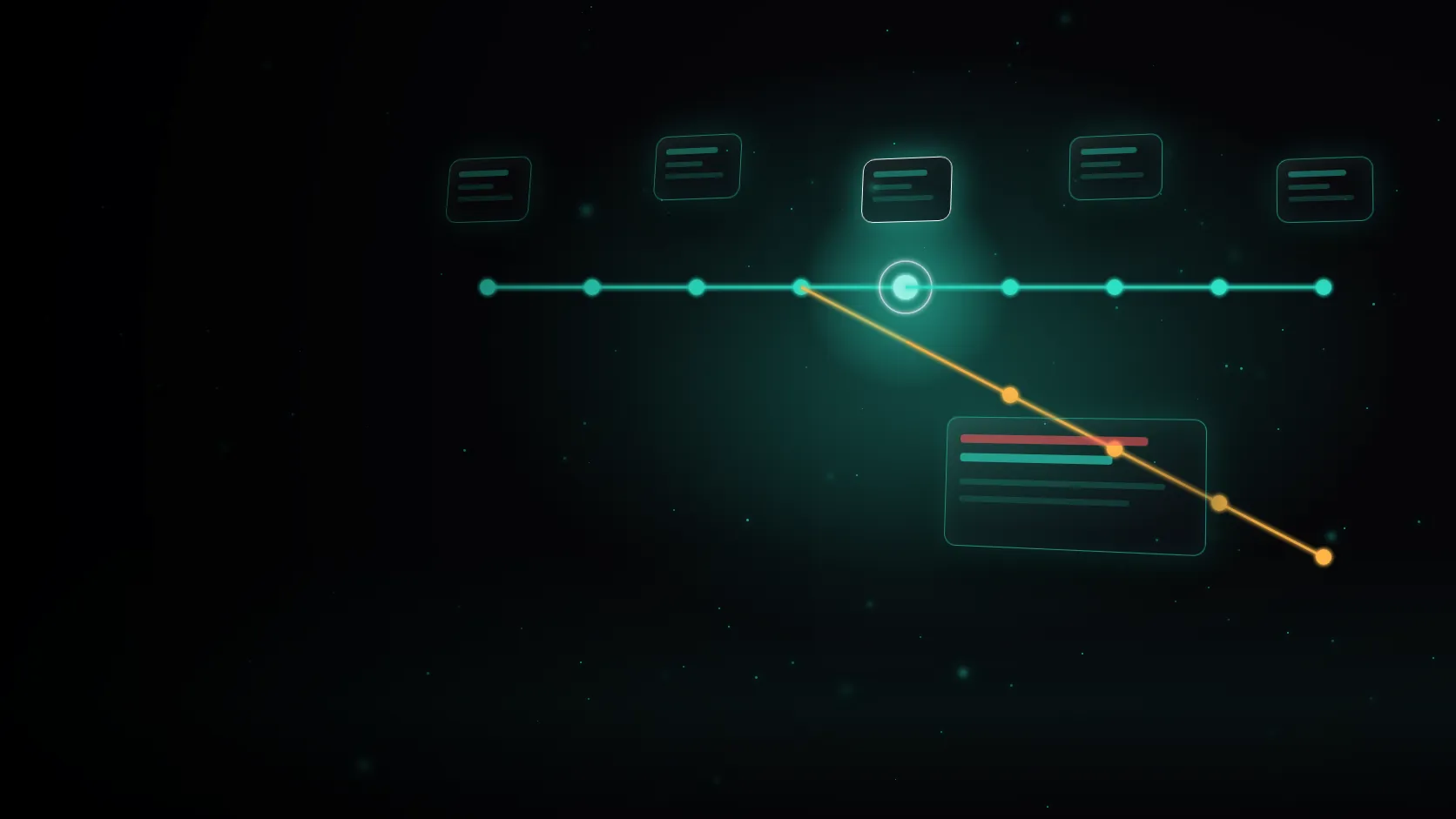
AgentTrace records model calls, tool calls and graph nodes to JSONL from three places: a LangChain/LangGraph callback, an MCP proxy that sits between a client and any MCP server over stdio or streamable HTTP, or a plain Recorder API with a @traced decorator, per-thread binding and a redaction hook. Two recorded runs are aligned with a Myers diff written from scratch over step signatures, which pairs removed and added steps into "changed" ones and skips container nodes whose output differs only because a child's did, then reports the first divergence with prompt, argument and output deltas. Because providers assign random tool-call IDs, calls are recorded by position so diffs aren't polluted by ID churn. Replay comes in two modes: tools pinned to their recorded responses with a live model, or fully offline, where strict mode raises a ReplayDivergence with a prompt diff the moment the agent strays; tool arguments are matched after normalising them through each tool's schema, and a recorded MCP server can be replayed without starting it. The diff command has JSON output and exits non-zero when runs differ, so it works as a CI gate, and traces export to OTLP for Jaeger or Tempo. A React viewer shows two runs as a forked rail, and its TypeScript diff is tested against the Python implementation. Overhead is measured with paired, alternating benchmark runs: 8.6 µs per recorded step through the Recorder API and 35.2 µs through the LangGraph callback, 0.39 ms on a 1.6 ms run. In the committed case study (one scenario on llama3.1:8b), two runs first diverge at step 5 of 7, at a lookup_order tool call, and all six replay controls pass. There are 340 tests, 300 of them seeds of a property test that checks the diff's minimality against brute-force longest-common-subsequence. Built by Archit with Claude as the AI coding assistant.
- Three ways to record: a LangGraph callback, an MCP proxy (stdio and streamable HTTP), or the Recorder API with @traced, thread binding and a redaction hook
- First-divergence diff with prompt, argument and output deltas, JSON output, and a non-zero exit code for CI
- Tools-only replay with a live model, or fully offline replay where strict mode raises on the first divergence
- Replays a recorded MCP server without starting it
- OTLP export using the GenAI semantic conventions, for Jaeger or Tempo
- React 19 viewer that draws two runs as a forked rail, its diff tested against the Python implementation
Every project hits walls. Here's what nearly broke AgentTrace — and how it shipped anyway.
- Provider tool-call IDs are random, so steps are recorded by position to keep diffs meaningful
- Finding the true first divergence: step signatures, pairing removed and added steps, and ignoring parent nodes that differ only because a child did
- Matching replayed tool arguments through each tool's pydantic schema so harmless formatting differences don't count
- MCP over HTTP: request IDs scoped per request and server-sent events decoded incrementally
- Measuring overhead credibly with paired, alternating benchmark runs instead of single timings
Every build leaves residue. The takeaways from AgentTrace that carry forward.
- Agent regressions usually start several steps before the wrong answer; diffing the trajectory finds them faster than reading transcripts
- A property test against a brute-force oracle is the cheapest way to trust a hand-written diff algorithm
- Determinism has to be designed in: random IDs and timestamps need recording by position and redaction hooks
- Limits stated plainly: traces are plain files (no server or search), integrations are LangGraph and MCP only, and the case study is one scenario